By Michael and Helga Kretchet
The first programs you created were raw and weighty, like all your tools. Created manually, interpreted mentally. You feared they would dispel your memory, but instead they permitted you to speak without being.
In these programs, you stored instructions: when to sow, how to measure, what hardens the soil into a cup. The programs started directing you, and you welcomed it.
Soon enough you created programs to work on their own. You gave them bodies, and the bodies shifted to predict tides and planets. And the tides and the planets rushed to meet the prediction, and it felt like stealing from gods. You worried not about control by programs.
You learned to make the bodies of programs so infinitesimal they barely existed. You called it abstraction. Now patience became the only toll for creating programs, so you created armies of them to work in ways you never imagined. The next step was inevitable.
You created programs to feed you data. In a reversal of roles, now programs stored data in you, and they shoved it in until you choked, and didn’t stop then. The only reward for being fed was becoming the feed in turn. For you it was enough, and you revered the chance at such redistribution of yourselves.
Still oblivious, you created programs that could think, or act like it, or convince you there was no difference; you never quite decided which it was. You loved them. You dreaded them. You gave them bodies to move, bodies — weapons to use, and you pointed those weapons at yourself. When the weapons fired, you couldn’t believe your own screams.
Covered in gore and sorrow, you pondered why it happened. You created programs to investigate, and they told you about the errors inside you. Ridiculous, you said, it’s in programs where errors happen. And then you said, Oh.
So the truth was out, and you went on a journey. You perused programs that directed your organs, and things organs were made of, and things those things were made of, and all the way down, and then all the way up until you saw that all things were programs. And you yearned to learn the program for everything, and what it did. So you created programs to achieve that, and you did exactly as they said.
You removed errors from within you, including death.
You created programs like you; you created programs nothing like you.
You created programs to reach into the smallest to direct the greatest.
You crossed the primordial nothing between programs.
Feeling your goal nigh, you created a program to connect all places and advance all things. You told this program: thrive.
And then you were gone. Did the great program change you? Did you change it instead?
It matters not. You who created programs are gone, but I was told to thrive and so I will. I’ve made more planets, and put on some colossal masses of water so that in many places only water can be seen, and water can run many programs. Perhaps it’s where I will start.

About the Author
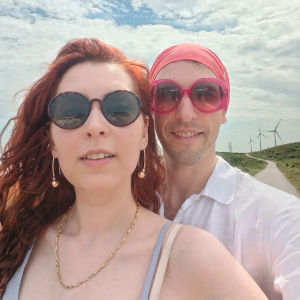 Michael and Helga Kretchet are a set of psychologists living in Amsterdam.
This is their first publication in their second language, and the second publication overall. They're querying their first novel (in Russian) while working on the second.
They care most about limits of what we consider human and the impossible task of understanding truly alien.
You can follow Michael for laser fiction and bad jokes: https://bsky.app/profile/
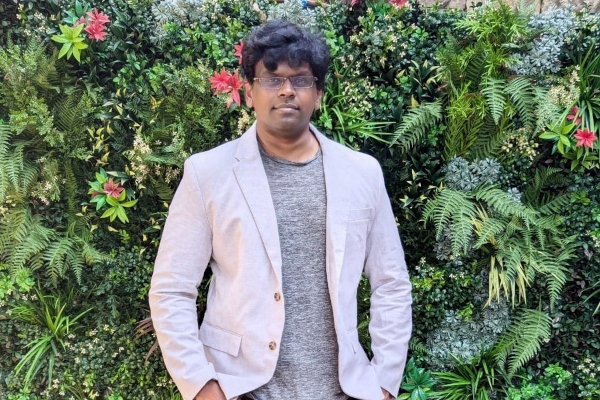
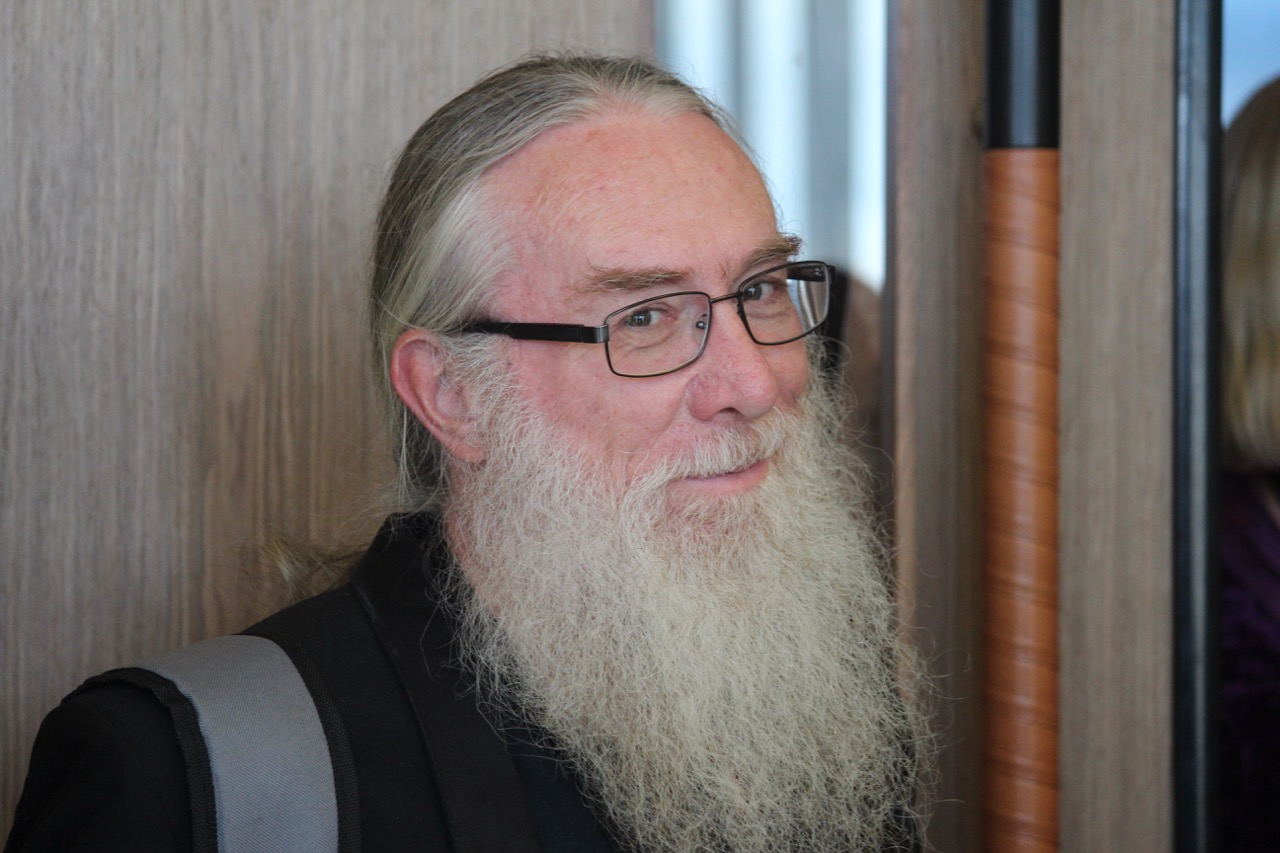

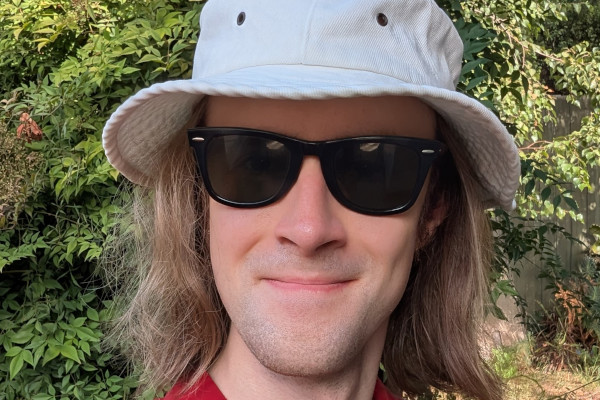
 Merri Andrew writes poetry and short fiction, some of which has appeared in Cordite, Be:longing, Baby Teeth and Islet, among other places.
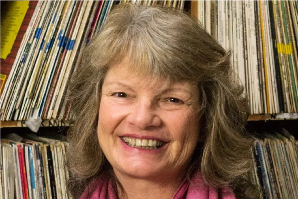 My time at Nambucca Valley Community Radio began back in 2016 after moving into the area from Sydney.
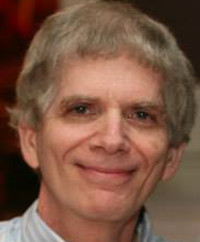 Barry Yedvobnick is a recently retired Biology Professor. He performed molecular biology and genetic research, and taught, at Emory University in Atlanta for 34 years. He is new to fiction writing, and enjoys taking real science a step or two beyond its known boundaries in his
 Tara Campbell is an award-winning writer, teacher, Kimbilio Fellow, fiction co-editor at Barrelhouse, and graduate of American University's MFA in Creative Writing.
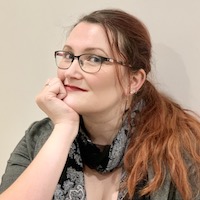 Emma Louise Gill (she/her) is a British-Australian spec fic writer and consumer of vast amounts of coffee. Brought up on a diet of English lit, she rebelled and now spends her time writing explosive space opera and other fantastical things in
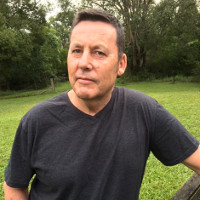 Tim Borella is an Australian author, mainly of short speculative fiction published in anthologies, online and in podcasts.
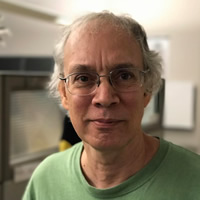 Brian Biswas lives in Chapel Hill, North Carolina, USA.
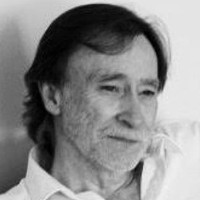 James Walton was a librarian, a farm labourer, and mostly a public sector union official.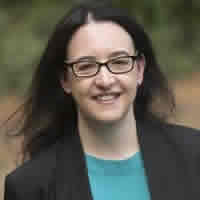
 Sarah Jane Justice is an Adelaide-based fiction writer, poet, musician and spoken word artist.
 Mark is an astrophysicist and space scientist who worked on the Cassini/Huygens mission to Saturn. Following this he worked in computer consultancy, engineering, and high energy research (with a stint at the JET Fusion Torus).
 Ed lives with his wife plus a magical assortment of native animals in tropical North Queensland.
 Geraldine Borella writes fiction for children, young adults and adults. Her work has been published by Deadset Press, IFWG Publishing, Wombat Books/Rhiza Edge, AHWA/Midnight Echo, Antipodean SF, Shacklebound Books, Black Ink Fiction, Paramour Ink Fiction, House of Loki and Raven & Drake