
By Richard A Shury
‘Oh, they’re lovely,’ Connie said to me after the children had gone to bed. We sat at my mahogany dining table and sipped a sweet, white port. ‘So cute, and so well-behaved.’
‘Thank you,’ I replied. ‘I picked them myself.’
‘Well of course,’ she said. ‘I’ve heard a lot of people go with the algorithm. Makes it seem more natural,’ (here she made quotes in the air with her fingers) ‘whatever that means. But they’re supposed to be like you, a part of you.’
‘I hope I made the right choice. It’s vanity, I know, but I couldn’t wait any longer. And trying to find the right man, ugh.’
‘Tell me about it,’ Connie replied. I could see her face starting to flush, which made me happy. Drunk Connie was a fun, if rare, companion these days. ‘And no one would ever know,’ she added hastily. ‘I mean, they’re just like you.’
‘Thank you,’ I said, feigning relief. I already knew it. I’d designed everything, every detail. And the price I’d paid. I thought about mentioning it, but Connie was speaking again.
‘I suppose I should think about it too, I’m not getting any younger.’ She reached for the bottle, poured herself another glass. Around us the house clicked into gear, sloshing soft, warm air around the room to compensate for a slight Santa Ana chill. I looked at my open plan kitchen, which flowed seamlessly into a minimalist living room. Vases of delicate filigree perched on towers of marble, and bleeding edge entertainment sensors embedded discretely in various surfaces. Very un-child friendly, the assessor had said. Sterile, lots of sharp corners. But I refused to change it, and my donation to the agency made him see things my way.
‘You want to make children?’ I asked, turning my attention back to Connie. ‘But what about Ted?’
‘Ted is fine,’ she said. ‘But he can’t… we can’t. Not the usual way.’ She grimaced, like the word left a bad taste in her mouth.
‘Oh. Him or you?’ I asked, then wondered if I had been too blunt.
‘Looks like it’s him. But I’ll keep him on,’ she added. ‘He’s amazing in bed, and you don’t throw away eight figures.’ Her laugh hung in the air between us.
‘I see.’
‘I hate to be crass darling, she went on, but how much did they cost? I mean, the materials, moulding, the programming, all of it.’
‘The places I used, and most others, have what they call levels, the usual clichéd silver and gold and platinum. A bit passé if you ask me. If you want the best, full design input, full say on coding, everything except the base programming, then you’re talking ten mil per.’
Connie tried to look unfazed, but I knew she didn’t have that kind of money. I wondered if Ted would be willing to shell out. It was a big commitment, and there was no guarantee they’d agree on all features. Not to mention the minefield of shared ownership.
An awkward silence was interrupted by Dahlia’s head poking around a corner.
‘Mummy, will you come tuck us in?’ she squeaked.
Bobby’s face appeared beside Dahlia’s. ‘Hi Mummy.’ As he waved enthusiastically, his chubby face wobbled.
‘In a few minutes, love,’ I replied. ‘Now back to bed.’
They smiled and scampered back upstairs.
‘I tried to get that behaviour programmed out,’ I said to Connie, who was staring at where my children had been, ‘but some things are just base code. I’d better go and shut them down for the night. Back in a tick.’
Connie said nothing, just nodded as I swallowed the last of my port and headed upstairs to the children’s room.
About the Author
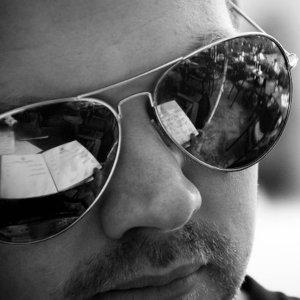 Richard A Shury is a SF nerd who dabbles in the literary arts.
His short stories have appeared in DreamForge Magazine, Parsec Ink, Roi Faineant, and After Dinner Conversation, among others.
He hopes these successes are the calm before a storm.
Call him a part-time optimist.


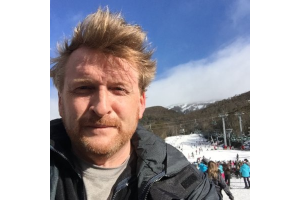
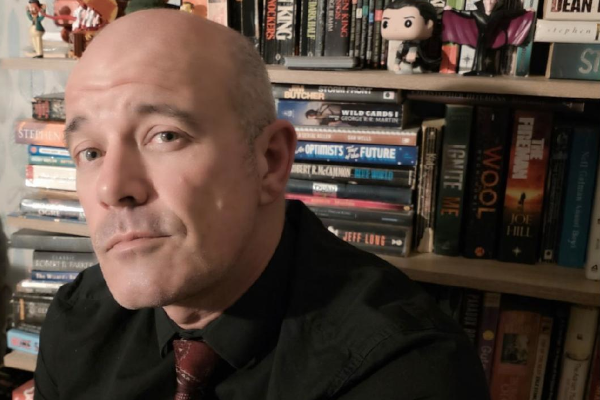
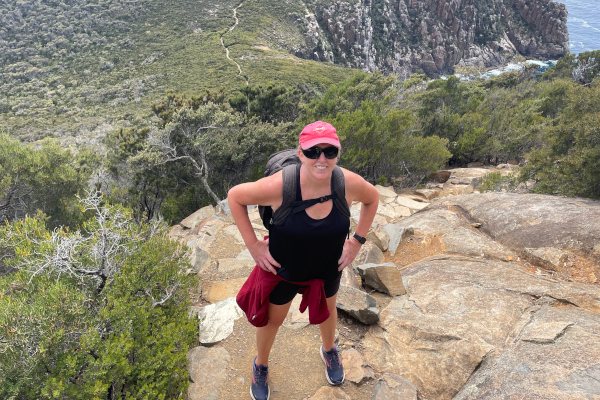
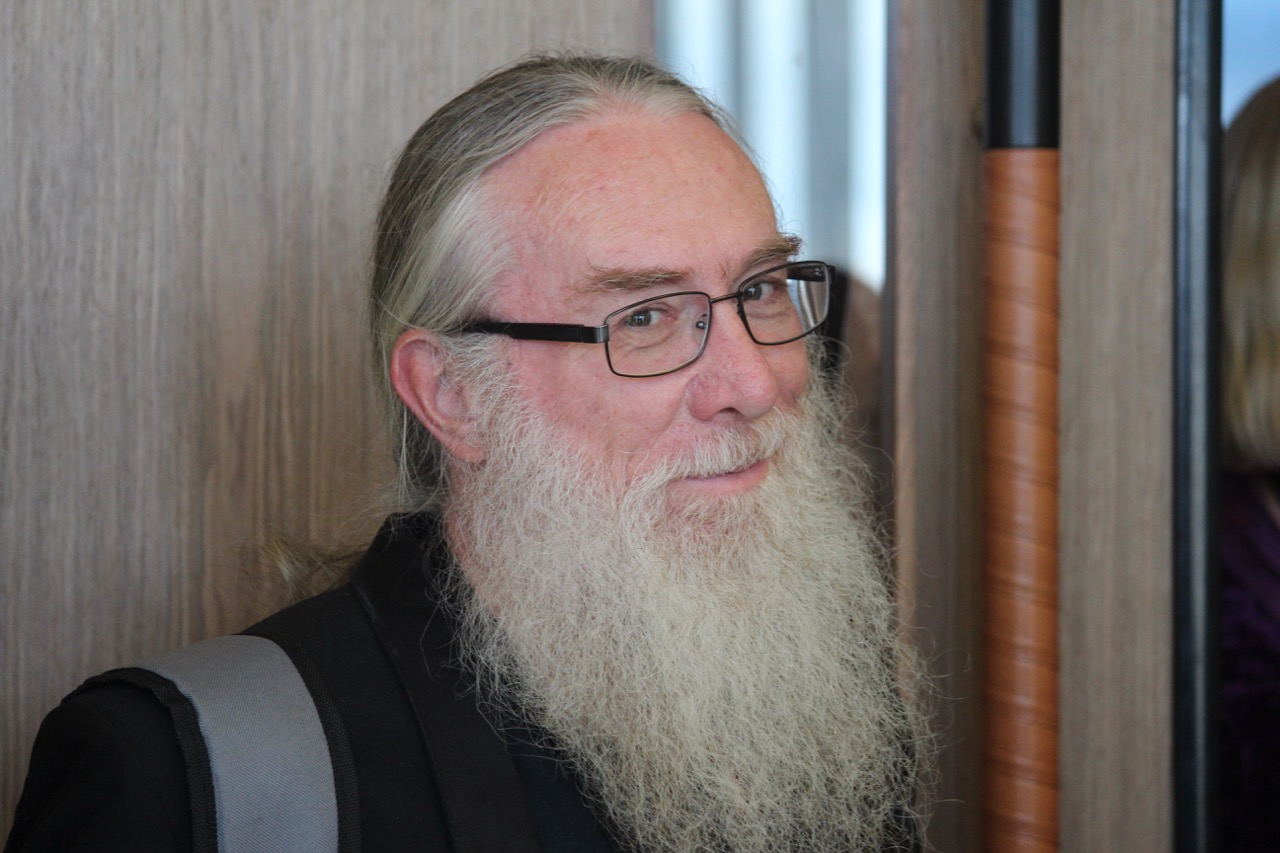
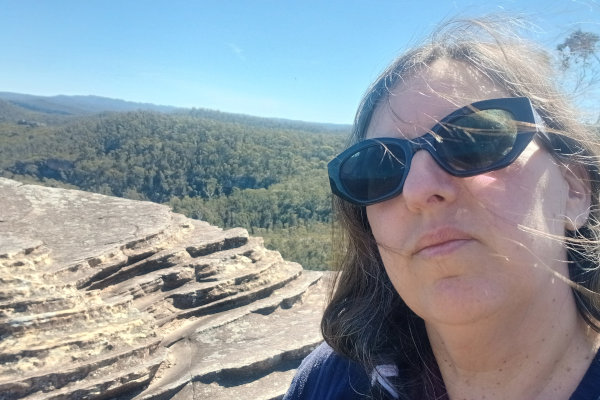
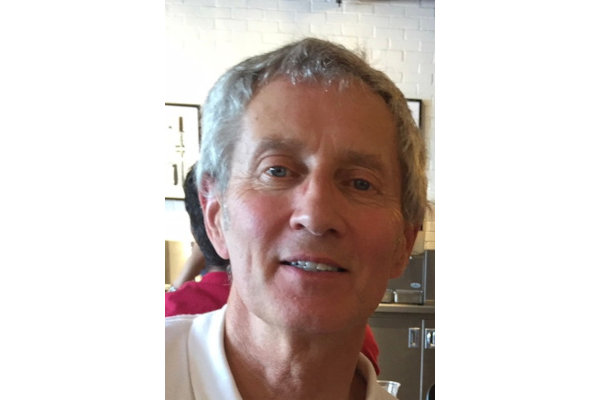
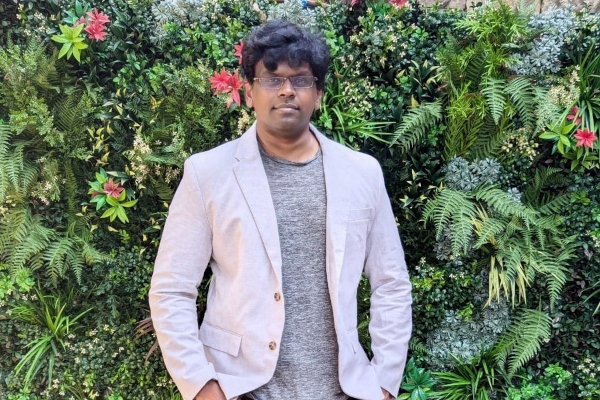
 Barry Yedvobnick is a recently retired Biology Professor. He performed molecular biology and genetic research, and taught, at Emory University in Atlanta for 34 years. He is new to fiction writing, and enjoys taking real science a step or two beyond its known boundaries in his
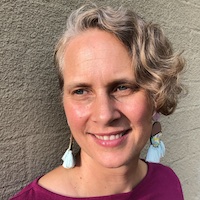 Merri Andrew writes poetry and short fiction, some of which has appeared in Cordite, Be:longing, Baby Teeth and Islet, among other places.
 Mark is an astrophysicist and space scientist who worked on the Cassini/Huygens mission to Saturn. Following this he worked in computer consultancy, engineering, and high energy research (with a stint at the JET Fusion Torus).
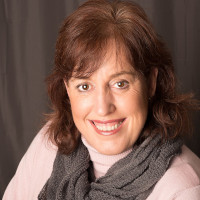 Geraldine Borella writes fiction for children, young adults and adults. Her work has been published by Deadset Press, IFWG Publishing, Wombat Books/Rhiza Edge, AHWA/Midnight Echo, Antipodean SF, Shacklebound Books, Black Ink Fiction, Paramour Ink Fiction, House of Loki and Raven & Drake
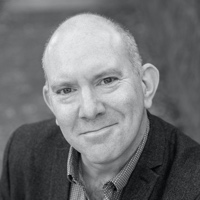 Alistair Lloyd is a Melbourne based writer and narrator who has been consuming good quality science fiction and fantasy most of his life.
 Brian Biswas lives in Chapel Hill, North Carolina, USA.
 Ed lives with his wife plus a magical assortment of native animals in tropical North Queensland.
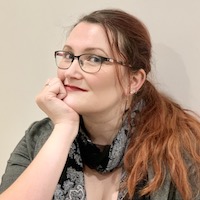 Emma Louise Gill (she/her) is a British-Australian spec fic writer and consumer of vast amounts of coffee. Brought up on a diet of English lit, she rebelled and now spends her time writing explosive space opera and other fantastical things in
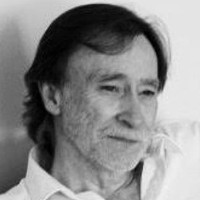 James Walton was a librarian, a farm labourer, and mostly a public sector union official.
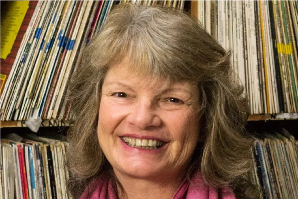 My time at Nambucca Valley Community Radio began back in 2016 after moving into the area from Sydney.
 Tara Campbell is an award-winning writer, teacher, Kimbilio Fellow, fiction co-editor at Barrelhouse, and graduate of American University's MFA in Creative Writing.
 Sarah Jane Justice is an Adelaide-based fiction writer, poet, musician and spoken word artist.
 Tim Borella is an Australian author, mainly of short speculative fiction published in anthologies, online and in podcasts.